
Summer programming
- Seasonal programming
The opening night of the summer exhibition will take place on 12 June at 6PM.
For AXENÉO7’s summer 2026 season, the centre takes shape as a living framework. It brings together not only projects to be presented, but situations to be activated, spaces to be cultivated, and iinvitations to be pursued. The work appears as repurposed objects, mobile structures, containers, surfaces for use, and spaces of conviviality.
With Clélia Berthier, welcomed through the extension of a cross-residency between the Conseil des arts et des lettres du Québec, AXENÉO7, Nantes Métropole, and Le Lieu Unique, as well as a collaboration with Centre CLARK and Atelier CLARK, the exhibition unfolds as a shared space around objects that are both sculptural and functional. It brings together contributions by artists encountered through research conducted during a residency at Centre CLARK, as part of the artist-member exchange with BONUS, the City of Nantes’ artist studios.
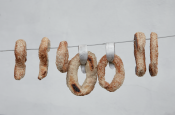
Like an oven, a belly, a form that contains, heats, transforms, and gathers, the project turns the exhibition into a site of daily encounter and gathering. The works are not only there to be seen: they are prepared, shared, and eaten — maybe.
In parallel, the centre inaugurates the first iteration of moving earth, a circulation initiative developed with Écart, in Rouyn-Noranda, and supported by the Conseil des arts et des lettres du Québec through the program Soutien à des initiatives structurantes pour la circulation d’œuvres en arts actuels.
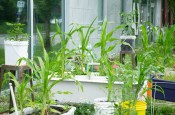
With NOUS / OTRXS by Martín Rodríguez, AXENÉO7 begins a two-season cycle. Previously presented at SBC Gallery of Contemporary Art, the project first takes root outside the centre, around La Filature and within its surrounding neighbourhood, before transforming the Jean-Pierre-Latour gallery as a place for observation, growth and development.
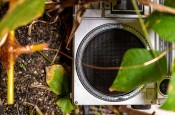
The chinampas appear as a way of thinking autonomy through care, while the milpa proposes a form of cohabitation grounded in mutual support and complementarity. Over the course of the project, macetas, containers, and displaced or repurposed objects contribute to the gradual construction of a milieu while informing the development of a protocol: a tool for transmission, reflection, and circulation.
Through these proposals, the season attends to forms and gesturesthat go beyond their expected scope, becoming supports for transmission and transformation, and manifestations of situated knowledge and shared uses.
Activities
Partners