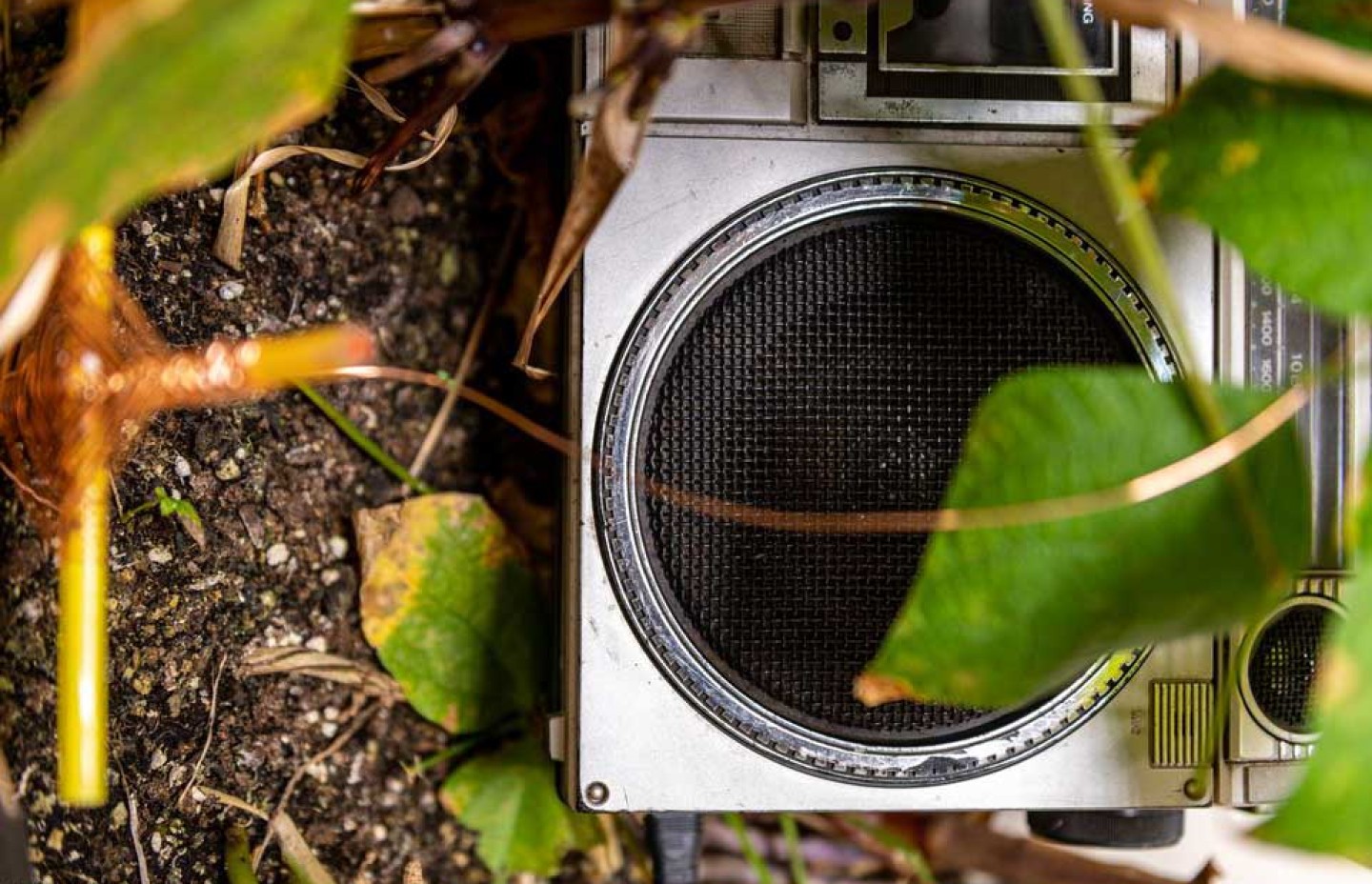
Photo credit: Freddy Arciniegas / Arcpixel, courtesy of SBC Gallery of Contemporary Art.
Extramural Exhibition | salle Jean-Pierre Latour + in front of La Filature Inc. + la Maison de l'amitié de Hull
NOUS / OTRXS : A Late Spring
Martín Rodríguez
- Extramural Exhibition
The exhibition NOUS / OTRXS: A Late Spring is one of two exhibitions presented at AXENÉO7 as part of its collaboration with artist Martín Rodríguez.
It is presented in partnership with Écart, in Rouyn-Noranda, as part of Moving Earth, an initiative supported by the Conseil des arts et des lettres du Québec through the program Soutien à des initiatives structurantes pour la circulation d’œuvres en arts actuels.
"The future belongs to those who cultivate cultural sensitivities to differences and who use these abilities to forge a hybrid consciousness that transcends the 'us' versus 'them' mentality and will carry us into a nos/otras position bridging the extremes of our cultural realities, a subjectivity that doesn’t polarize potential allies."
— Gloria Anzaldúa
As a Xicanx artist shaped by migration, I long navigated the in-between—marginalized by the nation-states to which I “belong”. Having often moved or migrated from one territory to another, I rarely felt rooted until my daughters were born in Montréal. Having lived on this territory the longest out of any other, this project’s core is a means for me to establish kinship and gain an understanding of the implications of my presence as a Xicanx person in The Great White North.
This winter, I was invited by AXENÉO7 to present a second iteration of my work NOUS/OTRXS, through which I explore how transmission, in the form of radio, seeds, and ancestral knowledge, forms bonds between humans, plants, and territories. Over the course of the seasons, the radio garden will adapt, grow, and cultivate a space of resonance and resilience by weaving together ancestral agricultural practices, sound archives, radio transmission, and community engagement.
This living exhibition is inspired by traditional Mesoamerican farming methods, such as the Milpa and Chinampas — floating gardens rooted in Aztec permaculture — cultivated with heirloom seeds from the Global South: corn, beans, squash, amaranth, hot peppers, and more. These seeds are accompanied by stories and songs broadcast through an ad hoc radio integrated into the installation: copper antennas planted in the soil feed the plants with waves, nourishing both vegetal life and the memory of migrant communities. Shaped like an Ojo de Dios, a woven ritual object from Indigenous Mexican cultures, these antennas become spiritual transmitters, symbolizing the return to Aztlán, the mythical homeland of the Nahua peoples, claimed as their own by the Chicana community, and weave a connection between territory and cosmovision.
Presenting this work in Gatineau offers a unique opportunity to continue learning from the seeds and sharing their teachings with a community interested and engaged with their cultivation. Through AXENÉO7, I developed a friendship formed through cumbia and plants with Rodrigo Medrano, now the caretaker for the plants when I am absent. In addition, we are partnering with La Maison de l’amitié de Hull to cultivate the seeds at their community garden, meeting and engaging with community members who grow their own produce and sustenance.
- Xicanx is a non-binary term, similar to “Chicano” or “Chicana,” used to refer to people of Mexican descent living in the United States. This term denotes a connection with indigeneity, decolonial consciousness, the inclusion of genders beyond the Western binary imposed by colonialism, and transnationality.
Martín Rodríguez
Martín Rodríguez is a Montreal-based transmission and sound artist situating his work between radio, migration, and atonement. Rooted in his Xicanx upbringing along the Arizona–Mexico border, his practice employs performance, intervention, and installation to engage aural histories across Mexico, the United States, and Canada. His recent work extends into migrant and agricultural contexts, where sound, transmission, and community engagement foreground resilience, interdependence, and collective listening. Informed by the Xicanx methodology of rasquachismo, Rodríguez reconfigures materials through pragmatic acts of remaking shaped by adaptation and scarcity. His work has been presented nationally and internationally.
Partners